SWIMMING POOL SERVICE, REPAIRS, RENOVATIONS & CONSTRUCTION - (631) 714-5658

Swimming Pool Services & Maintenance
Suffolk Pool Corp (SPC) guide for US homeowners: choose, maintain, and repair your pool like a pro with expert checklists and safety tips.
SWIMMING POOL SERVICES & MAINTENANCE
A Libuser
1/8/202617 min read
Your pool is supposed to be the best part of your backyard, yet cloudy water, mystery leaks, or a failing pump can turn it into a money pit fast. Choosing the wrong pool service, skipping key maintenance, or attempting the wrong DIY repair often makes problems worse instead of saving time and cash.
By understanding how to pick reliable swimming pool services, what weekly and seasonal tasks you can confidently handle yourself, and when professional repair companies are worth every dollar, you can keep your water clear, equipment running smoothly, and your family safe. It takes consistency and a bit of know-how, but with the right approach, maintaining and repairing your pool becomes far more manageable and predictable.
A crystal-clear pool isn’t a luxury—it’s the result of smart choices, disciplined maintenance, and knowing when to call in the pros; treat your swimming pool like an investment, and it will pay you back in years of safe, sparkling fun for your family and guests.
Reference: Maintaining Your Pool
Understanding Swimming Pool Services: What You Really Need (and What You Don’t)
Overview of Common Residential Pool Services
Most residential pool owners don’t need every service a company offers, but you do need a reliable core routine. Standard cleaning usually includes skimming leaves, brushing walls, and vacuuming the floor so debris doesn’t stain plaster or clog your filter.
Companies like Leslie’s Pool Services and local providers in cities like Phoenix or Orlando often bundle this into weekly or bi‑weekly visits, which is typically enough for a 15,000–20,000‑gallon backyard pool.
Regular Pool Maintenance vs. Full-Service Pool Management
Regular maintenance covers basics: testing water, balancing chlorine and pH, and checking equipment for obvious issues. A homeowner in Dallas, for example, might schedule a simple weekly visit just to keep chemistry stable through the hot season.
Full-service management adds openings, closings, and priority repair calls. In the Northeast, many owners pay a flat monthly fee that includes chemicals and a full winterizing visit, avoiding surprise bills when it’s time to close or reopen the pool.
Finding the Best Swimming Pool Service Near Me
Searching Locally and Evaluating Online Reviews
Finding a dependable pool company starts with casting a wide net locally, then narrowing it down based on real customer experiences. Begin by searching “pool service near me” on Google, Yelp, and local directories to build a shortlist within a reasonable driving radius.
Pay close attention to overall star ratings, number of reviews, and how recent they are. A company with 4.6 stars from 150 reviews in the last two years is usually a safer bet than one with 5 stars from just five reviews. Detailed comments about reliability, communication, and how the techs solved tough problems—like diagnosing a recurring pump failure—are often more helpful than the score alone.
Round this out by asking neighbors, your HOA, or local Facebook groups which companies they actually trust. For example, some Phoenix HOAs openly recommend specific vendors after years of consistent performance on dozens of pools.
Licenses, Insurance, and Certifications to Look For
Once you have a shortlist, verify that each pool company is properly insured and licensed before you let anyone touch your equipment. In most states, reputable firms carry general liability and workers’ compensation insurance so you’re not exposed if a technician gets injured on your property.
Check your local contractor license board (for instance, the Suffolk County Department of Labor, Licensing and Consumer Affairs (DLLCA) to confirm active licenses for pool contractors or maintenance providers. Ask whether technicians hold certifications from equipment manufacturers like Pentair or Hayward, or industry programs such as Certified Pool Builder (CPB).
Red Flags When Comparing Pool Repair Companies Near Me
As you compare options, watch for warning signs that a pool service might cut corners or disappear when problems arise. A big red flag is reluctance to show proof of insurance, licenses, or recent references. Another is a scribbled, handwritten estimate with no clear breakdown of labor, materials, or scope.
Be cautious of unusually low bids or pressure to pay in full upfront for repairs like pump installations or remodeling work. Reliable services typically take a reasonable deposit and bill the balance upon completion. If early communication is spotty—missed callbacks, vague answers, or constant rescheduling—that’s often how the relationship will continue once you’re locked into a service plan.
Questions to Ask Before Your First Service Visit
Before scheduling, treat the first call like an interview. Ask exactly what’s included in a standard visit.
Clarify who will be coming to your home, whether technicians are background-checked and trained, and how unexpected issues are handled. For example, some companies will text photos and a quote if they find a leaking filter seal during routine service. Ask about guarantees on repairs and parts, and whether they follow industry benchmarks similar to those tracked in Swimming Pool Cleaning Services in the US, where professionalism and repeat service quality drive long-term customer retention.
Core Pool Maintenance and Service Basics Every Owner Should Know
Core Pool Maintenance and Service Basics Every Owner Should Know
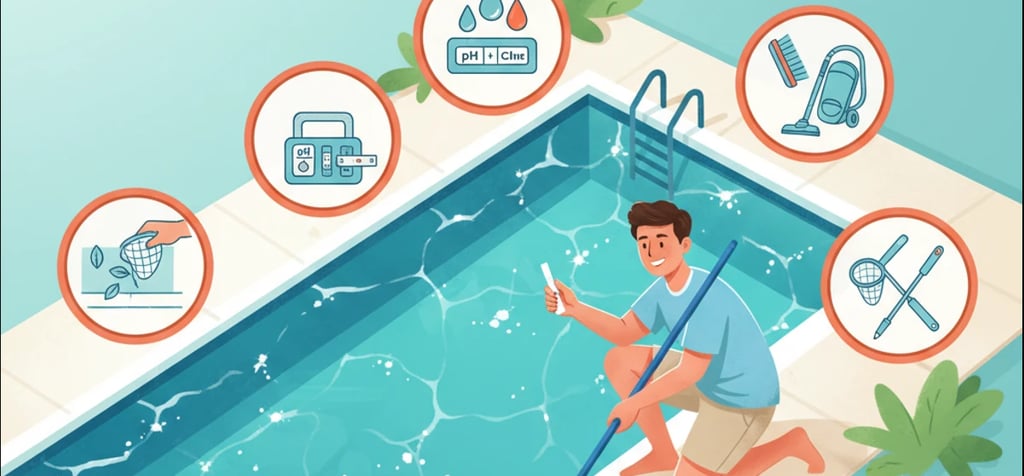
Weekly Pool Care Tasks
Staying on top of weekly chores keeps your water clear and your equipment from overworking. A quick 15–20 minute routine can prevent the kind of algae blooms that often lead homeowners in Phoenix or Orlando to call emergency pool services after just a few neglected weeks.
Start by skimming the surface before debris sinks, then brush walls, steps, and the tile line to stop algae from gripping on. Many owners use a 16–18 ft telescoping pole with interchangeable heads, like those from U.S. Pool Supply, to switch between skimmer, brush, and vacuum without changing tools.
Finish by vacuuming or running a robotic cleaner such as the Dolphin Nautilus CC Plus, and checking skimmer and pump baskets, water level, and pump operation. If you notice the pump basket half full of leaves each week, that’s a red flag you may need extra skimming or to trim nearby trees.
Understanding Pool Water Chemistry
Water chemistry is what keeps your pool comfortable, clear, and safe. The Centers for Disease Control and Prevention (CDC) recommends free chlorine at 1–3 ppm and pH between 7.2–7.8 for residential pools, a range that protects both swimmers and equipment.
Keep pH in range to avoid eye irritation and corrosion of metal parts like heater exchangers. Total alkalinity, ideally 80–120 ppm for most plaster pools, acts as a buffer so pH doesn’t swing wildly after a rainstorm or chemical dose. Many owners in hard-water areas like Southern California see cloudy water when alkalinity creeps far above this range.
Maintain sanitizer (chlorine or alternatives like bromine and salt systems) in the recommended range to kill bacteria, and use stabilizer (cyanuric acid) at roughly 30–50 ppm outdoors. Overusing stabilizer can cause “chlorine lock,” where chlorine tests show present but algae still appears, a problem frequently reported by service techs in sunny states like Texas and Florida.
Essential Homeowner Tools and Equipment
Having the right basic tools makes weekly maintenance faster and more consistent. A sturdy leaf skimmer, a nylon or stainless-steel pool brush matched to your surface, and a telescoping pole form the core toolkit for most backyard pools from New York to San Diego.
Pair these with a reliable test kit or test strips to monitor pH, chlorine, and alkalinity. Many service pros prefer drop-based kits like the Taylor K-2006 for accuracy, while busy homeowners often lean on test strips from brands like AquaChek for a quick read before work or on weekends.
For debris removal, choose a manual vacuum, suction-side cleaner, or robotic cleaner depending on budget and pool size. Keeping spare o-rings, silicone lubricant, and basic hand tools (Phillips screwdriver, adjustable wrench) on hand can save a last-minute trip to the store when a pump lid starts to leak or a union needs a quick adjustment.
Seasonal Pool Maintenance: Opening, Closing, and Year-Round Care
Spring Pool Opening Checklist
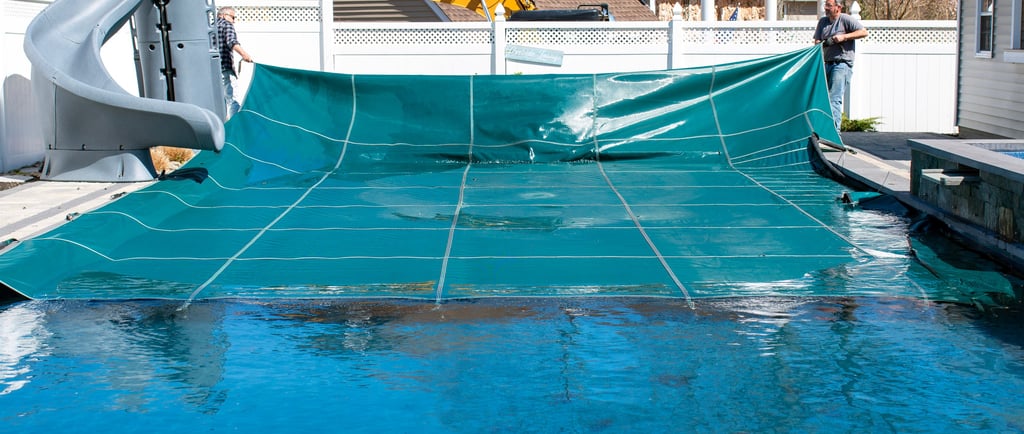
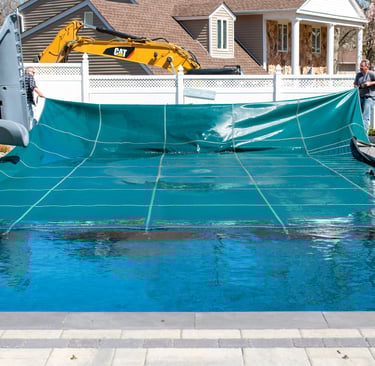
Spring opening sets the tone for your entire season. Start by carefully removing the cover so leaves and dirty water do not dump into the pool. Rinse, scrub, and dry the cover before folding; this helps prevent mold and extends its life by several years.
Once uncovered, inspect the pump, filter, and heater for cracks or leaks, then reconnect unions and plumbing lines. A service team like Suffolk Pool Corp notes that early leak detection can prevent costly mid-season repairs.
Proper Pool Closing and Winterizing
Closing correctly protects your investment through freezing temperatures. In cold regions such as the Northeast US, owners typically lower water below the skimmer and use a shop vac or air compressor to blow out lines before adding freeze plugs.
After a full brush and vacuum, balance pH, alkalinity, and calcium hardness, then add a winter algaecide. Secure a solid or mesh safety cover so wind cannot lift it; a tight-fitting cover keeps out branches, animals, and UV light that can break down chlorine.
Coordinating Seasonal Work with Professional Services
Pairing DIY care with professional help keeps costs predictable and equipment healthy. Companies like Suffolk Pool Corp offer scheduled openings, closings, and initial vacuum service, which many families in the NY suburbs book two to three months ahead of Memorial Day.
Use those visits to request an annual inspection of pumps, heaters, and automation, and to talk through upgrades such as variable-speed pumps or salt systems. This approach lets you handle routine skimming and vacuuming while pros manage complex tasks like line blowing, leak diagnostics, and control programming.
Reference: Winter, Spring, Summer, or Fall - Pool Maintenance for ...
Common Pool Repairs and How Swimming Pool Repair Services Fix Them
Frequent Issues: Leaks, Cracks, and Equipment Failures
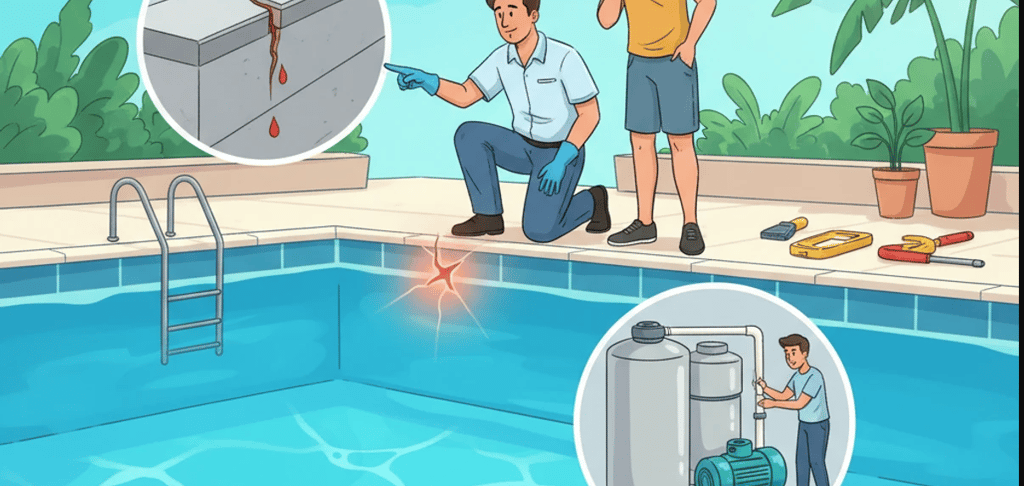
Most pool owners eventually face leaks, cracks, or equipment that refuses to start right before a weekend gathering. Professional swimming pool repair services use specific tools and methods to pinpoint the cause instead of guessing and replacing parts at random.
For leaks, technicians rely on pressure testing of underground plumbing lines, dye tests around fittings, and careful inspection of skimmers and return lines. Companies like American Leak Detection have shown that targeted leak detection can save hundreds of gallons of water a week compared with waiting to see water loss on the bill.
Structural cracks are evaluated to see if they’re cosmetic hairline fractures or signs of shifting soil and shell movement. On the equipment side, a failing pump is checked at the motor, impeller, shaft seal, and electrical connections, while heaters are tested at sensors, gas lines, and ignition systems before recommending repair or replacement.
Surface Problems and Structural Repairs
Pool surfaces wear out over time, especially in regions with freeze–thaw cycles like Colorado or the Northeast. A rough plaster finish or stained surface signals that it may be time for patching or full resurfacing.
For plaster pools, repair crews can chip out loose material and apply a bonded patch or resurface the entire shell with new marcite or quartz aggregate. Vinyl liner pools are handled differently: small tears are patched underwater, but liners showing wrinkles, brittleness, or fading—often after 8–12 years—are usually replaced.
Tile bands and coping also need attention. Loose tiles are reset and regrouted, and broken sections are replaced to prevent cuts. Damaged coping around the pool edge is rebuilt or recapped to restore a safe, clean transition between the deck and waterline.
Equipment Repair and Replacement
Behind every clear pool is a system of pumps, filters, and controls working together. When one component fails, energy use often spikes and water quality drops quickly, especially during heavy swim season.
Repair specialists may rebuild a pump with new seals and bearings or suggest upgrading to an ENERGY STAR–rated variable-speed unit, which the U.S. Department of Energy notes can cut energy use by up to 70% compared with single-speed models. Filters are serviced by changing sand or cartridge media, repairing unions and O-rings, or replacing cracked tanks that can’t hold pressure safely.
Heater repairs might focus on cleaning a scaled heat exchanger, replacing temperature or pressure sensors, or swapping out an old gas heater for a high-efficiency model. Many homeowners also ask for automation upgrades, such as new control panels or app-based systems from brands like Pentair or Hayward, so they can schedule pumps, lights, and heaters from a phone.
Typical Costs and Timelines for Pool Repairs
Repair timelines and budgets depend heavily on the type of issue and local labor rates. Simple fixes, like patching a small vinyl tear or replacing a leaky valve, are often finished in a single visit and may cost under a few hundred dollars in many US markets.
More extensive projects—such as full plaster resurfacing or complete liner replacement—can take several days from draining to refilling and balancing chemicals. Major equipment changes, including new gas heaters or electrical panels, sometimes require permits and inspections, meaning multiple trips and coordination with local code officials.
Because prices vary by region, pool construction type, and specific parts needed, reputable companies provide detailed written estimates that outline labor, materials, and any potential extras before work begins. This helps homeowners compare quotes accurately and avoid surprise add-ons once the pool is already drained or disassembled.
Reference: Swimming Pool Repair: Common Issues and How to Fix ...
Choosing Between DIY Pool Repairs and Professional Pool Repair Companies Near Me
Simple Repairs Most Homeowners Can Handle
Not every pool issue calls for a service truck in your driveway. Many basic repairs are straightforward, especially if you’re comfortable following a YouTube tutorial from brands like Pentair or Hayward and have a simple tool kit on hand.
For example, replacing skimmer baskets, pump lids, and common o-rings or pump lid gaskets is usually a 10–20 minute task. Cleaning cartridge filters, hosing off DE grids, clearing small clogs from skimmer lines, and resetting a tripped breaker or GFCI outlet are well within reach for most homeowners.
Repairs You Should Not DIY
Some pool problems cross the line from “handy” to hazardous. Anything involving 240V electrical connections, automation control panels, or gas heaters should be left to licensed electricians or gas-fitters who understand NEC and local code requirements.
Major structural crack repairs, deck movement, or chronic leaks that may require plumbing reroutes or excavation can easily cost thousands if done wrong. Reputable companies like American Leak Detection or local resurfacing specialists use pressure testing and professional materials that homeowners simply don’t have access to.
Estimating the True Cost of DIY vs. Hiring a Pro
The cheapest option on day one is not always the least expensive over five years. When you price DIY, include tools, specialty parts, learning time, and the risk of having to redo the job or call a pro to fix a mistake.
Professional pool repair companies often provide 1–3 year warranties on pumps, heaters, and resurfacing work. That guarantee, plus reduced safety risk and better efficiency, can offset a higher upfront invoice compared with a trial‑and‑error approach.
When to Get Multiple Quotes from Pool Repair Services
For big-ticket work—like resurfacing a 15,000-gallon plaster pool or replacing a 2.7 HP variable-speed pump—get at least two or three written estimates. Use them to compare scope of work, materials (for example, pebble vs. quartz finishes), timelines, and warranty terms.
Be cautious of bids that are hundreds of dollars lower than competitors with no clear explanation. Ask each company to walk you through their diagnosis, so you understand why one recommends a simple seal replacement while another suggests a full pump or heater swap.
Reference: Professional Pool Service Company vs. DIY: Which is Best ...
Upgrades and Improvements: Going Beyond Basic Pool Maintenance and Service
Energy-Efficient Pool Upgrades
Energy upgrades not only cut monthly bills, they also extend the life of your equipment. Many U.S. utilities report that variable-speed pumps can reduce pool energy use by 50–70% compared with single-speed models.
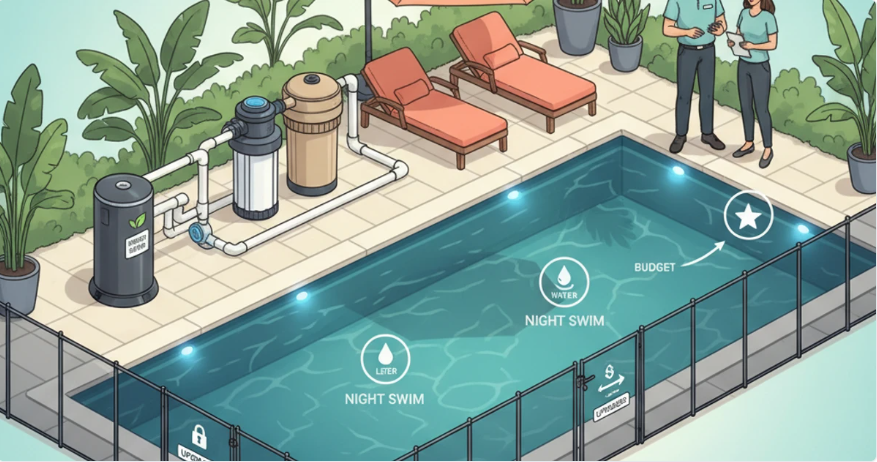
Upgrading to a variable-speed pump like the Pentair IntelliFlo or Hayward TriStar VS lets you run filtration at lower speeds for longer periods, saving power while improving circulation. Pair that with LED pool and landscape lighting, such as Jandy or Philips LED fixtures, to slash lighting wattage by up to 80% and create a more inviting backyard at night.
Water Quality and Filtration Improvements
Better water quality projects often pay off in comfort and reduced chemical use. Many homeowners switch to saltwater chlorine generators from brands like Hayward AquaRite for smoother-feeling water and steadier sanitation.
For clearer water, a UV or ozone system can reduce chlorine demand and help tackle stubborn contaminants like sunscreen and body oils. Upgrading to a larger cartridge or DE filter, or using glass media in a sand filter, makes it easier to maintain crystal-clear water with fewer backwashes and cleaning sessions.
Reference: Upgrading Your Pool for Enhanced Functionality
Keeping Your Pool Safe, Healthy, and Guest-Ready
Safety Practices for Families with Kids and Pets
A safe pool starts with strong physical barriers and clear rules. Many states, including Florida and New York, now require 4-5 foot fencing with self-closing, self-latching gates around residential pools to reduce child drownings.
Pair a code-compliant fence with door alarms or surface sensors, such as PoolGuard or Lifebuoy pool alarms, for layered protection. Teach kids basic skills like floating and exiting the pool, and enforce no-running and no-diving rules, especially in shallow ends.
For pets, add a visible ramp like the PetSTEP or Skamper-Ramp so dogs can climb out easily. Always supervise animals around water, since even strong swimmers can panic if they can’t find an exit.
Health Considerations and Chemical Safety
Healthy water depends on safe chemical handling. Store chlorine, shock, and acids in a locked, ventilated shed or deck box, away from heat and kids, following guidance from the CDC’s Healthy Swimming program.
Never mix chemicals, always use gloves and goggles, and follow label directions exactly. Keep chlorine between about 1–3 ppm and pH between 7.2–7.8 to avoid algae blooms and eye or skin irritation.
Shock the pool after heavy use, summer thunderstorms, or any fecal or vomit incident. For example, many owners shock Sunday night after weekend parties so water is clear and sanitized by Monday.
Pre-Guest Pool Readiness Checklist
Getting guest-ready is easier with a simple checklist. Test water chemistry 24 hours before visitors arrive using a liquid test kit or digital tester, then adjust chlorine and pH so everything stabilizes before swimming.
On the day of the gathering, skim leaves, brush walls, vacuum, and empty skimmer baskets so the pool looks inviting. Check that life rings, reaching poles, and a stocked first-aid kit are visible and easy to grab.
Walk the deck at dusk, confirming all lights, steps, and handrails are secure and working. Many accidents happen at night when a single burned-out pool or step light hides a tripping hazard.
Preventing Emergencies and Liability Issues
Preventing emergencies protects both people and your liability exposure. Schedule annual inspections with a licensed pool contractor or electrician to review pumps, heaters, bonding, and GFCI outlets, following National Electric Code guidelines.
Repair loose tiles, cracked coping, and broken rails quickly; insurers like State Farm and Allstate often ask for proof of timely repairs after an incident. If you host regular parties or short-term rentals through Airbnb or Vrbo, post clear rules about diving, alcohol, and unsupervised children.
Keep a simple log of maintenance, chemical tests, and service visits in a notebook or app. Documented care can help if an insurance claim or legal question arises after a slip, fall, or water-quality complaint.
Reference: Guidelines for Keeping Your Pool Safe and Healthy
Conclusion: Making Swimming Pool Services Work for You
Key Principles for Stress-Free Pool Ownership
Owning a pool should feel like a retreat, not a second job. The easiest way to stay ahead is through consistent, bite-sized maintenance instead of emergency cleanups. A simple weekly routine—skimming, brushing, and checking chemistry—can prevent cloudy water and algae blooms that might otherwise require a $300–$500 professional cleanup.
Catching small problems early matters just as much. A tiny pump leak or faint grinding noise can signal a failing seal or bearing; ignoring it can turn a $40 part into a $900 pump replacement. Smart upgrades like variable-speed pumps from Pentair or Hayward can cut energy use by up to 70%, and pairing them with an automated controller slashes your manual workload.
The key is balance: do the straightforward DIY tasks—like testing with a Taylor test kit—while leaning on pros for complex work such as heater repairs, automation programming, and major plumbing fixes.
Value of a Trusted Local Pool Service Relationship
A long-term relationship with a local provider turns pool care from reactive to proactive. When the same technician from a company like SPC – Suffolk Pool Corp visits regularly, they learn your equipment quirks, sanitizer preferences, and recurring trouble spots.
That familiarity means quicker diagnoses and more honest guidance. A tech who knows your five-year-old sand filter may suggest a $450 sand change, or upgrading to glass filter media instead of pushing a full $1,200 replacement. During routine visits, they can spot early signs of trouble—like low flow from a partially clogged impeller—before it ruins a motor.
Over time, a trusted pro helps you plan big upgrades, from salt systems to LED lighting, spreading costs over seasons instead of facing them all at once.
Creating a Simple Annual Pool Care Plan
A written annual plan keeps you organized and prevents last-minute scrambles before parties or heat waves. Break the year into three phases: spring opening, peak summer, and fall closing. For example, schedule an opening visit in April, weekly chemistry checks from May through September, and a winterizing appointment in October if you’re in cooler states like New York or Pennsylvania.
Decide what you’ll handle—such as weekly skimming and testing—and what a service like Suffolk Pool Corp or a local independent will do, such as equipment inspections and deep cleans. Put recurring reminders on your calendar for brushing, filter checks, and vacuuming.
Each off-season, review what worked and what didn’t. If you battled algae twice in July, adjust your plan with more frequent brushing or a mid-season filter service to stay ahead.
Immediate Next Steps to Improve Your Pool’s Condition
You can start improving your pool’s health today with a quick assessment. Walk the equipment pad and look for damp concrete, rust, air bubbles in the pump basket, or loud humming from the motor. These are early signs something isn’t right. Then test and record your water—free chlorine, pH, alkalinity, and stabilizer—using a reliable kit, not just strips.
If your pH is drifting high, for example, note how often you’re adding muriatic acid so a technician can help you troubleshoot the cause, not just the symptom. Research nearby providers with strong Google reviews and clear pricing; shortlist two or three and ask about a one-time inspection visit to baseline your pool.
That initial professional check—often $100–$200—can reveal hidden issues and give you a prioritized action list so every dollar you spend improves comfort, safety, and long-term equipment life.
FAQs About Swimming Pool Service, Maintenance, and Repairs
How Often Should I Schedule Professional Pool Maintenance?
Most residential pools do best with weekly or biweekly service, especially in warm states like Florida or Texas where the swim season is long. A typical weekly plan includes skimming, brushing, testing chemicals, and inspecting equipment.
If you swim only on weekends or live in a cooler climate, biweekly service plus your own quick checks can work. Families who host frequent pool parties or run short‑term rentals often bump to twice‑weekly visits to keep up with sunscreen, lotion, and higher bather loads.
When Should I Search for Swimming Pool Service Near Me Instead of DIY?
DIY maintenance is fine for basic skimming and simple test strips, but professional help is safer once electricity, gas, or complex plumbing is involved. Any work on a gas heater, automation system, or high‑voltage pump should go to a licensed pool contractor or electrician.
If cloudy water or algae keep coming back even after shocking, or the pump starts making grinding or screeching noises, that’s a sign to search “swimming pool service near me.” Local pros have tools like digital water analyzers and leak detectors that most homeowners don’t own.
Why Does My Pool Keep Turning Green Even with Regular Service?
Green water usually means algae is outpacing your sanitizer between visits. Strong UV in places like Phoenix or Las Vegas can burn off unstabilized chlorine in a few hours, so levels can drop from 3 ppm to near zero on a hot, sunny day.
Dead spots behind ladders, in corners, or near shallow tanning ledges can also harbor growth if brushing is inconsistent. Many service companies now recommend variable‑speed pumps set for longer low‑speed run times to improve circulation and reduce these problem zones.
How Do I Know If a Pool Leak Requires Professional Repair?
If you’re losing more than about 1/4 - 1/2 inch of water per day in mild weather, you may have more than evaporation. Soggy soil around the deck, air bubbles in the pump basket, or unexplained algae along one wall can also point to a hidden leak.
A simple bucket test—placing a bucket on a step, filling it to match the pool level, and comparing loss after 24–48 hours—helps confirm suspicion. If the pool drops faster than the bucket, leak detection specialists with electronic listening gear and dye tests are usually needed.
Best Time of Year to Hire Pool Repair Companies for Major Work
Major projects like replastering, installing a new vinyl liner, or upgrading to a variable‑speed pump are often cheaper and easier to schedule in the off‑season. In markets like New York, October through December or March through May is when many builders and service firms have more availability.
Homeowners who book resurfacing in winter often avoid spring price increases and rush fees. Planning big repairs before your opening date means you’re not competing with emergency calls when temperatures hit the 90s and everyone wants their pool ready.
Lowering Ongoing Pool Service and Repair Costs
Consistent basics—brushing walls, emptying skimmer baskets, and keeping pH and chlorine in range—can prevent expensive problems like scale buildup or heater damage. The National Plasterers Council notes that poor chemistry is a leading cause of premature surface failure.
Upgrading to an ENERGY STAR–rated variable‑speed pump from brands like Pentair or Hayward can cut electricity use by up to 70%, according to the U.S. Department of Energy. Pair that with annual inspections, and small issues like tiny leaks or worn o‑rings are caught early instead of turning into thousand‑dollar repairs.
Transforming your backyard dreams into reality since 2006. Licensed & Insured
Contact Us
Proud Member of:
contact@suffolkpoolcorp.com
631-714-5658



Copyright © 2026 Suffolk Pool Corp - All Rights Reserved.